
Plant, EHS, and environmental managers
Industrial wastewater with a phosphorus limit
USRE300 is a blended lanthanum/cerium chloride solution for facilities that discharge phosphorus or phosphate, whether the limit is in your own permit or on a POTW surcharge. We do not publish industrial trial results. Jar testing is the way to see it on your water.
Where it is considered
Any process wastewater with a phosphorus or phosphate number to hit. Typical industries:
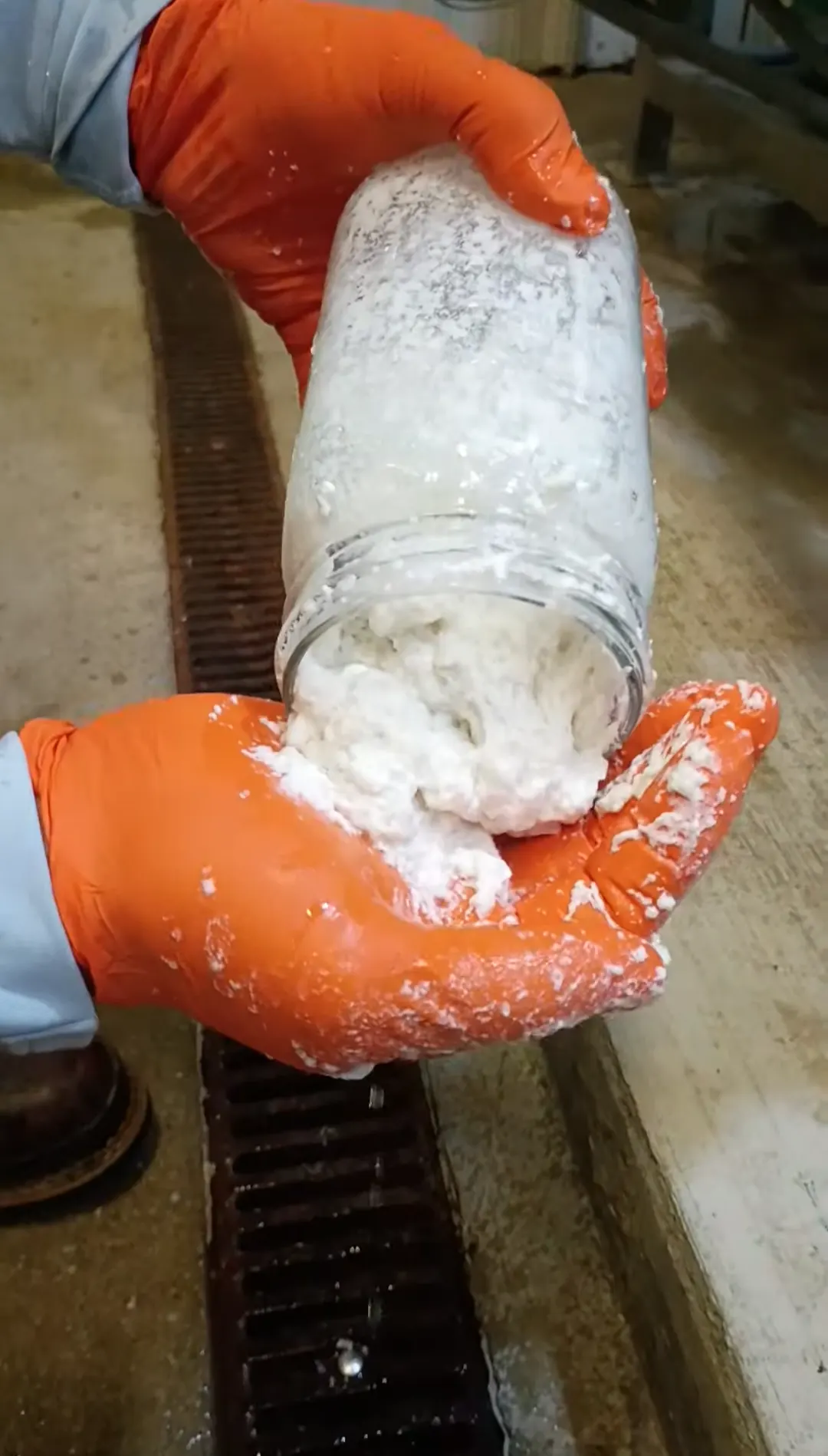
For food plants, and for meat and poultry processors, a rare earth coagulant adds far less inert iron or aluminum to recovered solids than ferric chloride or alum. That can help keep recovered protein, fats, and other byproducts cleaner, and may make them more valuable for rendering or reuse. Check end-use and feed or rendering requirements with your buyer and your regulator. The photograph is an example of recovered protein solids. It is not a claim that USRE300 produced that material, and it is not a test result.
- Food and beverage
- Dairy and meat processing
- Ethanol and biofuels
- Fertilizer and chemical manufacturing
- Metal finishing and phosphating
- Pulp and paper
- Pharmaceuticals
USRE300 industrial tests
What was observed on industrial wastewater
Two separate plants. No plant names. The jar comparison is visual only.
Card C · One plant, after a ferric program
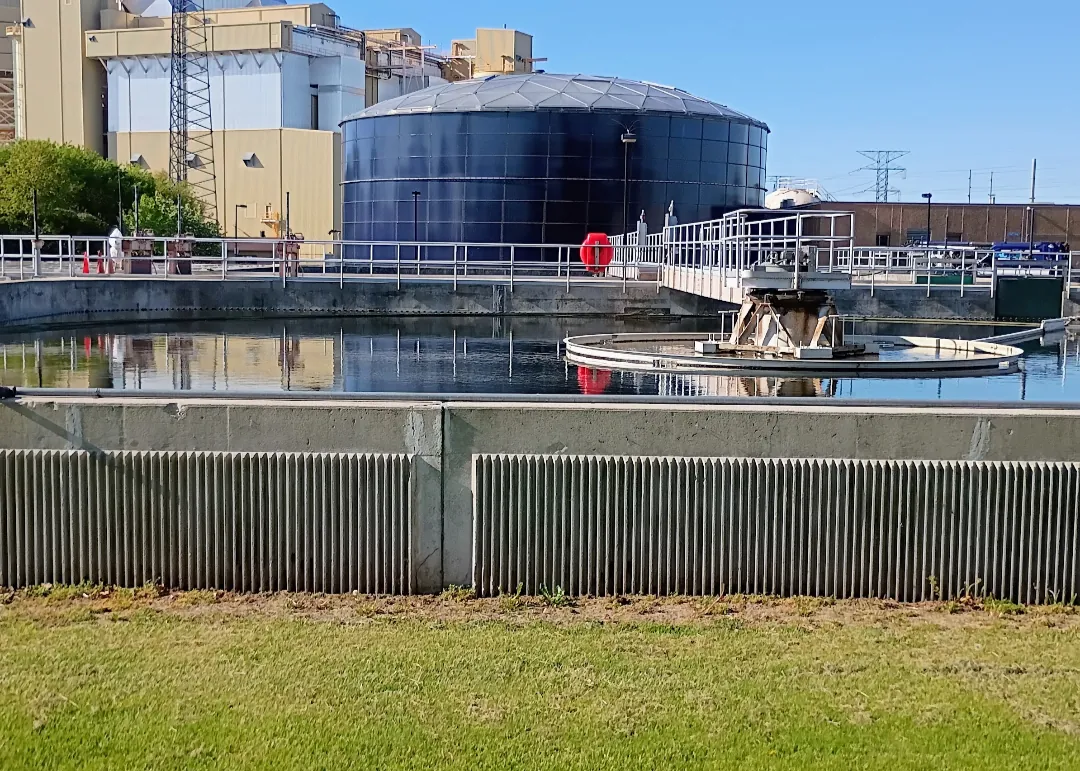
Dissolved-air flotation
Operating feed was about 400 mg/L, then trimmed against turbidity and load. This is one plant’s operating range, not a controlled results table.
- DAF effluent pH, ferric
- 5.8–6.3
- DAF effluent pH, USRE300
- 6.8–7.3
A higher residual pH may leave more alkalinity for nitrification. USRE300 does not add sulfate the way a ferric sulfate program does, which may mean less hydrogen sulfide. Neither point is guaranteed. Sludge volume and ammonia were not quantified here.
Card D · Bench/jar test, under these test conditions
Jar test versus ferric
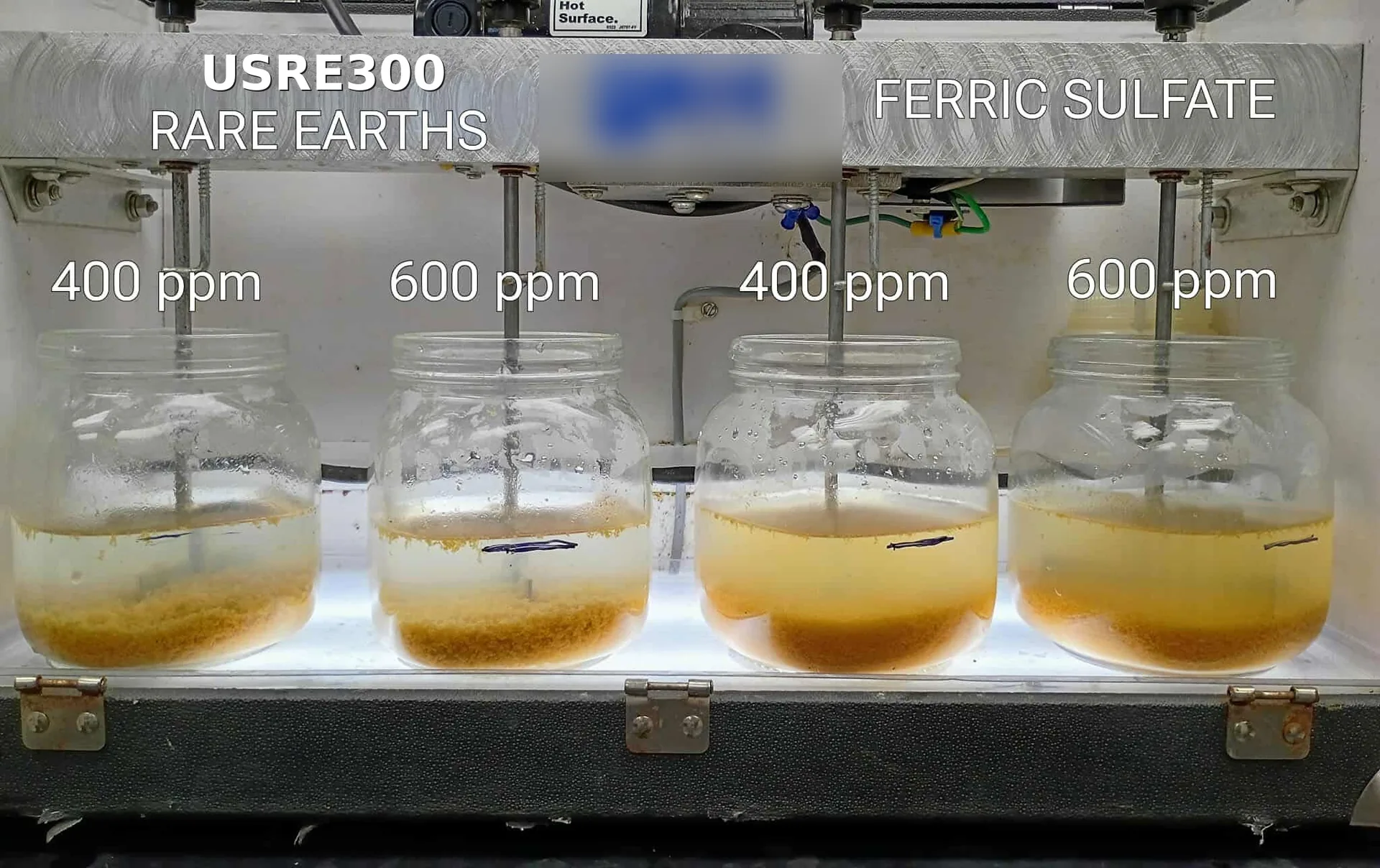
A separate industrial jar test. USRE300 and ferric sulfate at the same product doses, 400 ppm and 600 ppm. The source reported what the jars looked like. No residual phosphorus, solids, or BOD numbers were recorded for these jars.
At both doses, the USRE300 jars had a clearer supernatant and a denser floc that settled faster. That photograph does not show that a lower USRE300 dose will match ferric. It shows the jars at 400 and 600 ppm. Confirm solids capture, cake solids, and haul volume in a plant trial.
EPA’s Part 503 sewage-sludge pollutant table does not list lanthanum or cerium. That is not an approval to land-apply or reuse the solids. Check with your regulator.
What lanthanum-based coagulants are known for
General properties of this class of coagulant. Not new test claims, and not a promise that USRE300 will hit a number on your effluent until you jar-test it.
01
Phosphorus stays bound
Lanthanum-based coagulants form a very stable, insoluble lanthanum phosphate, rhabdophane, so phosphorus stays in the solids instead of returning to the water.
02
Short contact times
The reaction is fast, which suits pretreatment trains that do not have a long detention time.
03
Wide operating window
This class of coagulant is used across a wide pH range and is less sensitive to temperature than many iron and aluminum salts.
04
Less chemical sludge
A low dose volume compared with ferric chloride or alum means less chemical sludge to dewater and haul.
05
Limits and surcharges
Plants use it to help meet a permit limit or a POTW phosphorus surcharge. Whether it will meet yours is a jar-test question.
06
No iron staining
Without an iron salt, you avoid the rust-colored staining iron can leave on equipment and in effluent.
07
Less corrosive
The solution pH is about 4, much less acidic than typical ferric chloride, so it is easier on pumps, piping, and concrete.
08
Drop-in feed
It can be fed with the storage tank and metering pumps many plants already use for metal salts.
Less solids through the whole plant
The bigger value is not only the phosphorus number. Many facilities run a domestic biological plant and an industrial plant side by side, one dewatering on a belt press and the other on a screw press. Those sludges do not condition the same way. Sodium aluminate or alum, pushed harder to meet a limit, makes more aluminum phosphate and hydroxide solids. That can load the presses, raise polymer use, send more filtrate and pressate back into the process, increase hauling, and push effluent solids up. Solids held at low dissolved oxygen can release phosphorus and increase the dose again. A rare earth feed binds phosphate in stable compounds and can remove phosphorus with less chemical solids. Less sludge, less polymer, and less recycle are potential outcomes to measure. They are not published industrial results.
Measure total and soluble phosphorus, sludge production, polymer, filtrate and pressate solids, cake solids, press throughput, and hauling loads.
On toxicity, independent university research reported that the lanthanides tested showed no sign of genotoxicity and appeared to pose little risk in cell assays. That work did not test USRE300. Read the citation.
List price is $0.57/lb plus freight. Ships anywhere in the US. Freight quoted at cost and added to your invoice. Drums, totes, and bulk tankers.
Service companies and distributors can also put their own brand on USRE300. Labels and an SDS are prepared for your review, and we can ship direct to you or to your customer. Discuss a private label program.
Send us your effluent data / request a jar test