
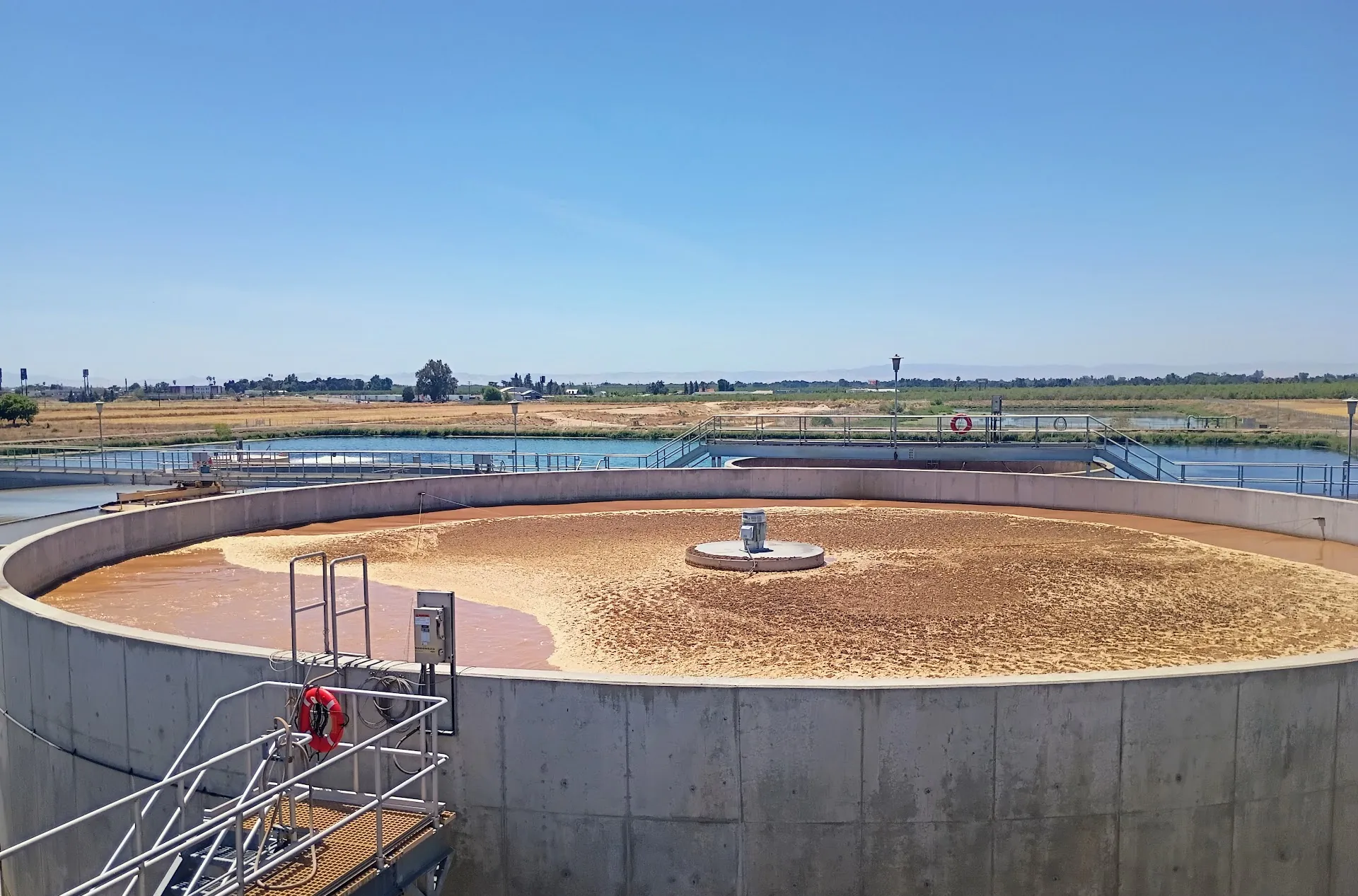
Not a USRE300 test
What plants measured with lanthanum chloride
Full-scale municipal phosphorus-removal numbers. Shown with the source.
Evaluation summary
Membrane bioreactor plant
Full-scale municipal trial, membrane bioreactor plant (Pacific Northwest), 2025
March–October comparison of lanthanum chloride against the prior ferric chloride season. Not a USRE300 test.
Evaluation summary
IFAS laboratory evaluation
Lab evaluation, municipal IFAS plant (Intermountain West), 2026
Clarifier, IFAS, and aeration samples. Best contact was return sludge ahead of the IFAS. A 30-day trial was recommended.
The figures below are from independent municipal evaluations of lanthanum chloride rare earth coagulants. They are not USRE300 test results. USRE300 is a blended lanthanum/cerium chloride solution sold for the same duty: phosphorus removal.
~30 µg/L
Effluent phosphorus held near 0.03 mg/L through the season
~50% less chemical
Total phosphorus-removal chemical volume, per the evaluation summary
~800 dry tons
Less chemical sludge to process in one season
99%
Ammonia removal maintained (99.28% then 99.04%)
6/6
WET tests passed, acute and chronic
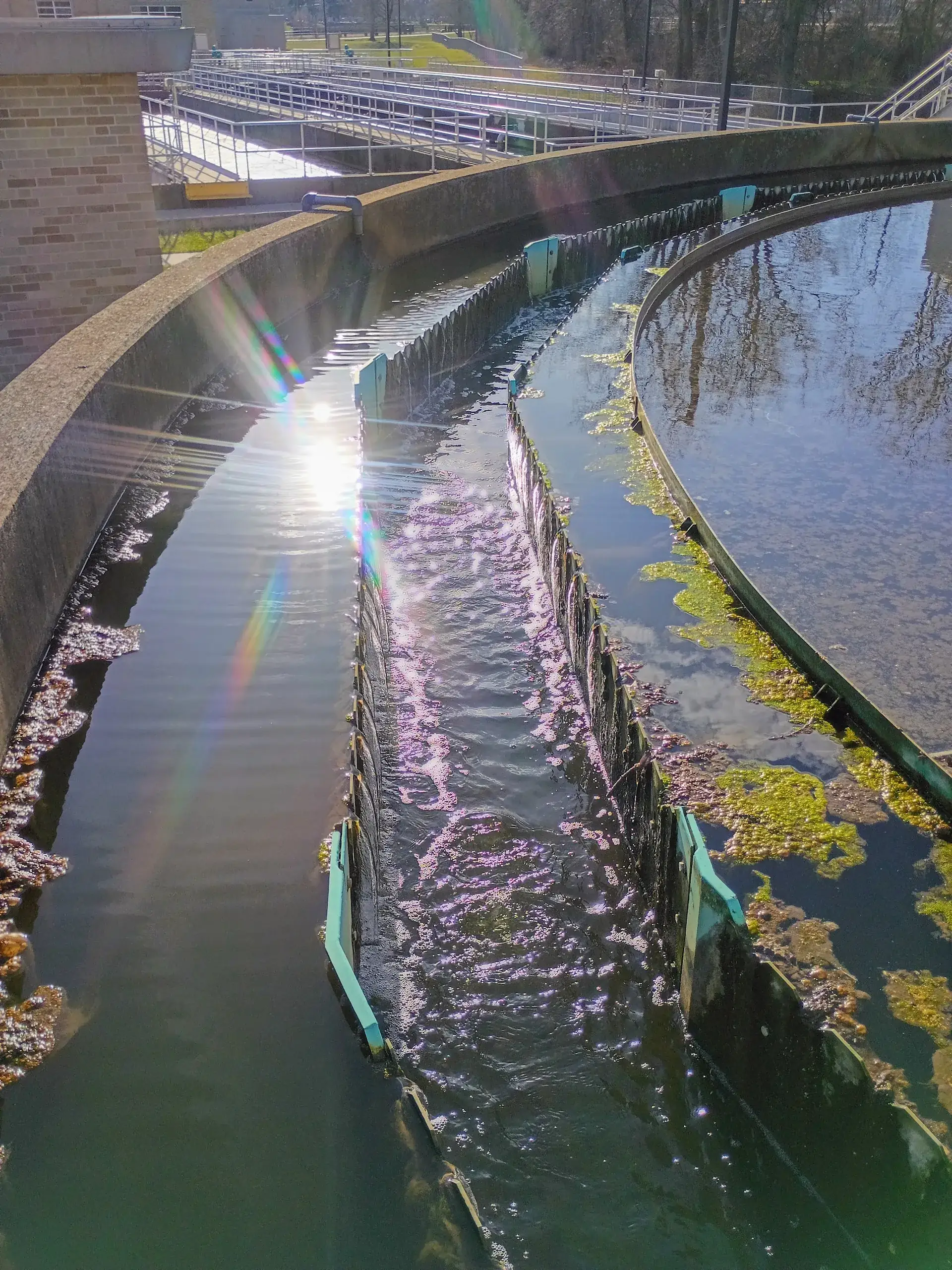
Full-scale membrane bioreactor trial
Full-scale municipal trial, membrane bioreactor plant (Pacific Northwest), 2025
March through October 2025 on a lanthanum chloride coagulant, compared with March through October 2024 on ferric chloride. Effluent phosphorus stayed near 30 µg/L (0.03 mg/L) and met the plant’s permit limits through the season.
Gallons per day. Ferric chloride is shown at 700 because the reported figure was greater than 700.
2024 total 229,001 gal, all ferric chloride. 2025 total 140,544 gal: 96,849 gal ferric chloride and 43,695 gal lanthanum chloride.
- About 168 gallons per day of lanthanum chloride versus more than 700 gallons per day of ferric chloride at the same feed point. That is about 76% less volume at that point.
- Total phosphorus-removal chemical was 229,001 gallons in 2024, all ferric chloride. In 2025 it was 96,849 gallons of ferric chloride plus 43,695 gallons of lanthanum chloride, or 140,544 gallons. The evaluation summary called that roughly 50% less total chemical.
- About 800 dry tons less chemical sludge in one season, alongside 139,193 fewer gallons of coagulant.
- Nitrification held. Ammonia removal was 99.28% in 2024 and 99.04% in 2025. The volatile fraction of mixed liquor suspended solids rose from 70.3% to 75.4%.
- No vivianite scale. Ferric chloride and phosphate can form vivianite in digesters. Before the change, that plant had taken a digester offline for as long as six months in two of every three years.
- Solution pH around 4, against ferric chloride’s highly acidic feed. Less corrosion of pumps, piping, and concrete, and less alkalinity supplementation for nitrification.
- Fewer bulk deliveries, and a lower spill risk. Whole effluent toxicity testing, acute and chronic, with Ceriodaphnia dubia and fathead minnow, passed all six tests. Survival was near 100%, including at peak dose.
- The existing ferric tank and feed pumps were reused. No new storage or delivery system was added. The reaction is fast enough for tighter dose control, and it was less sensitive to temperature and pH swings. Annual cost was comparable to ferric chloride while using far less volume.
Lab evaluation at an IFAS plant
Lab evaluation, municipal IFAS plant (Intermountain West), 2026
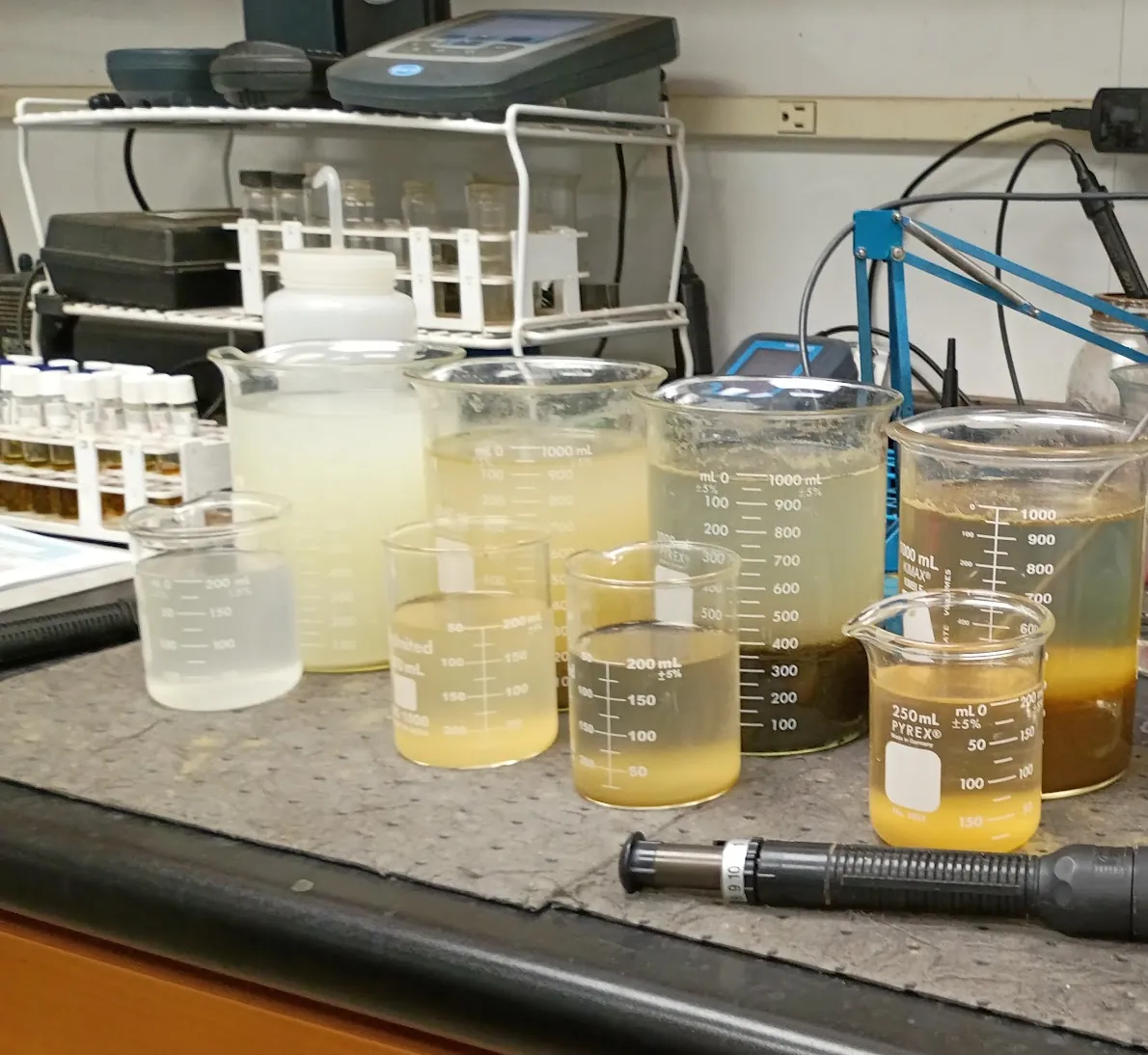
Samples from the clarifier, the integrated fixed-film activated sludge, and the aeration basins showed a measurable drop in total phosphorus. The longest contact time, and the best feed point in that evaluation, was return activated sludge ahead of the IFAS. The evaluation recommended a 30-day full-scale trial. Expected benefits called out there were more consistent effluent phosphorus, stronger permit compliance, denser sludge, and drier biosolids.
Sludge reduction
The bigger value is not just phosphorus removal. It is less solids through the whole plant.
From the same independent municipal evaluation already on this site. Not a USRE300 test, and not an industrial trial. Site-specific results vary; jar testing recommended.
~800 dry tons
Less chemical sludge in one season
~50% less chemical
Total phosphorus-removal chemical, per the evaluation summary
139,193 gal
Fewer gallons of coagulant
70.3% to 75.4%
Volatile fraction of mixed liquor. More active biomass, less inert chemical solids
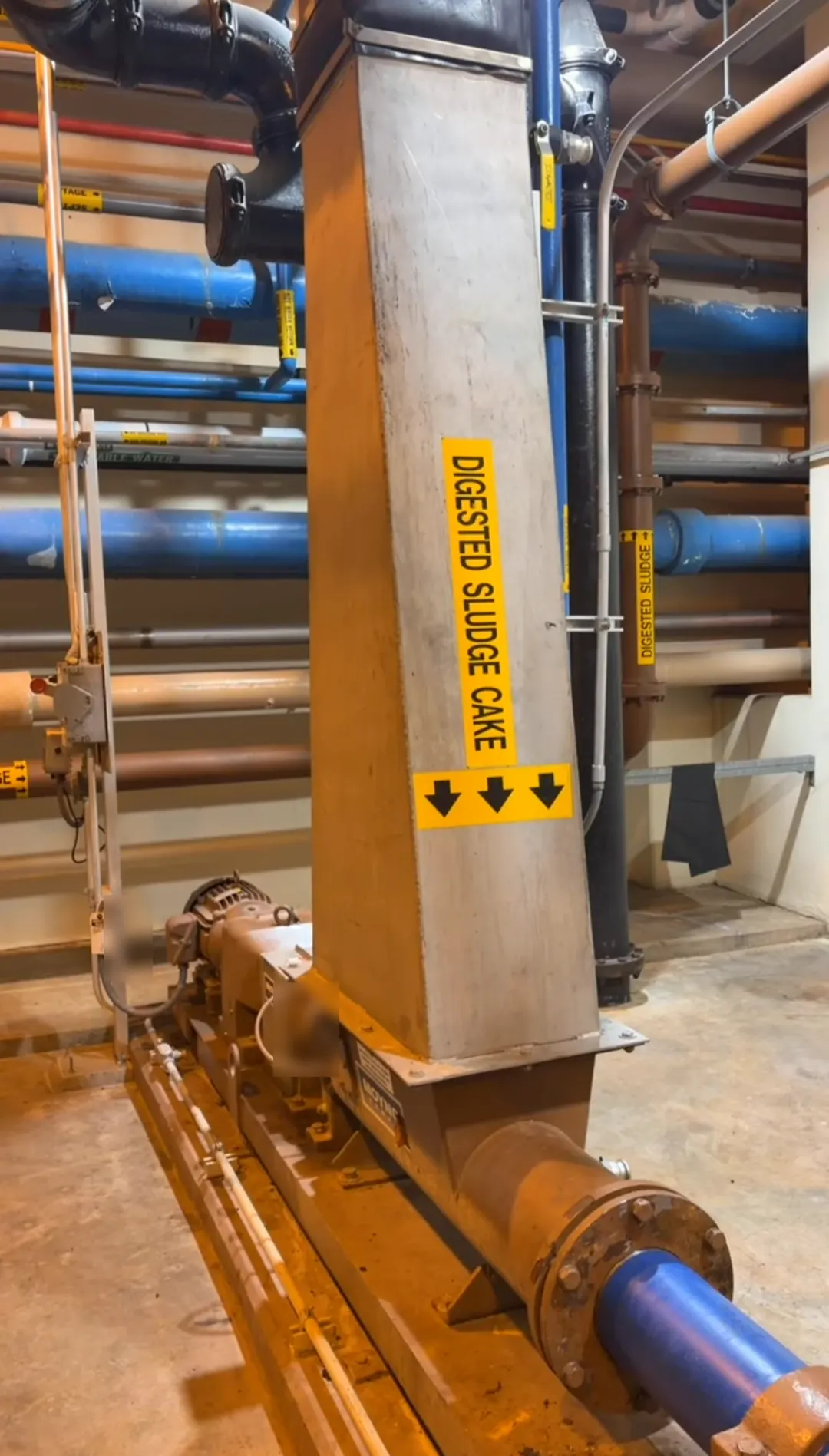
March–October ferric chloride season versus the following March–October with lanthanum chloride in the mix. Bar length is gallons, not dollars.
Keep digesters online
No vivianite scale in the digesters during that municipal trial. Ferric chloride and phosphate can form vivianite. Before the change, that plant had taken a digester offline for as long as six months in two of every three years.
- The IFAS lab evaluation expected denser sludge and drier biosolids. Less sludge usually means less hauling, less dewatering polymer, and lower disposal and landfill tipping cost. This site does not publish dollar figures for those savings.
Aluminum salts and the solids loop
Many sites run a domestic biological plant and an industrial plant side by side. One may dewater on a belt press and the other on a screw press, and the two sludges need different conditioning. With sodium aluminate or alum, raising the feed to chase a phosphorus limit produces more aluminum phosphate and hydroxide solids. That can mean more sludge, a larger solids inventory, more load on the presses, more polymer, more filtrate and pressate back to the head of the plant, and higher hauling cost. Operators often see effluent total suspended solids go up. Solids held under low dissolved oxygen, or in anaerobic conditions, can release stored phosphorus and raise coagulant demand again.
What a rare earth feed can change
Rare earth chemistry binds phosphate very strongly into stable compounds, so phosphorus can be removed with significantly less chemical solids. That can mean less sludge, a lower solids inventory, less polymer, less press loading, less recycle, and more stable phosphorus capture with less re-release. These are expected benefits to test, not proven results for every plant or for USRE300.
What to measure in a trial
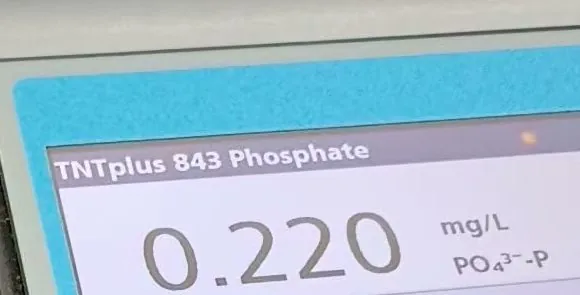
- Total phosphorus and soluble phosphorus
- Sludge production
- Polymer use
- Filtrate and pressate total suspended solids
- Cake solids
- Press throughput
- Hauling loads
Beneficial reuse
Cleaner solids, more reuse options
These are general properties of lanthanum-based rare earth coagulants, plus what the municipal evaluation already reported. They are not a new industrial trial, and they are not a regulatory determination.
01
Stable phosphate mineral
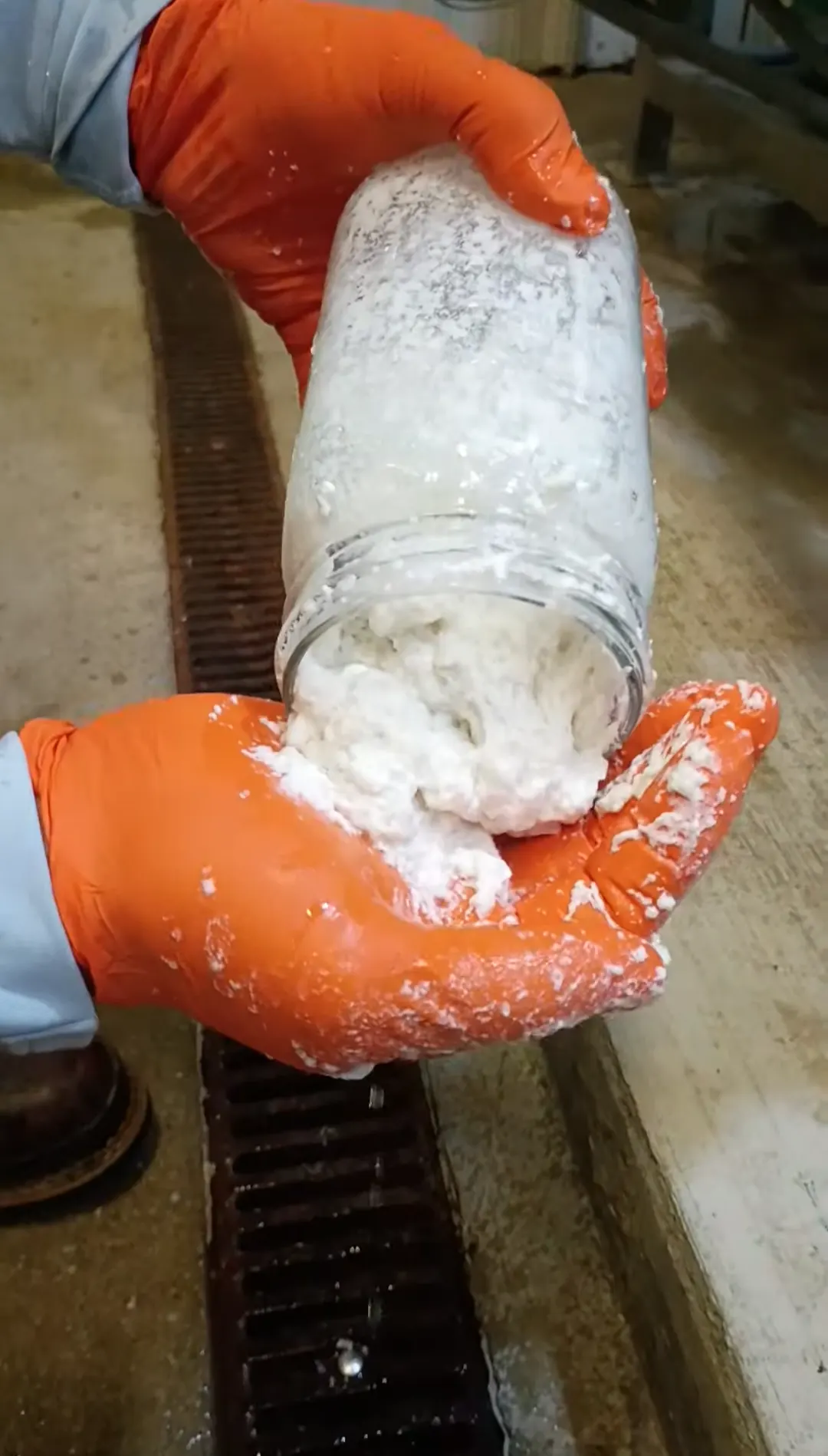
Lanthanum-based coagulants form a very stable, insoluble lanthanum phosphate, rhabdophane, so phosphorus stays bound in the solids.
02
Less iron and aluminum in the cake
A lower dose of iron or aluminum salt can mean less of those metals in biosolids. That can support land application, composting, and other reuse programs.
03
Fewer inert solids
The municipal trial saw the volatile fraction of mixed liquor rise from 70.3% to 75.4%, which means more active biomass and less inert chemical solids.
04
Recovery, not a promise
Phosphorus held in a stable mineral may open a path toward phosphorus recovery and other circular uses. There is emerging interest in recovering rare earths and phosphorus from solids. Check with your state biosolids program and your regulator. Nothing here is a permit approval or a guarantee.
Independent university research, not a test of USRE300, found the lanthanides they studied showed no sign of genotoxicity and appeared to pose little risk in four in vitro bioassays. Safety and toxicity research.
Safety and toxicity research
Independent university research on lanthanide coagulants
This is a public, peer-reviewed paper. It did not test USRE300. The authors describe rare earth coagulants as prime contenders for phosphorus removal and note that, unlike typical coagulants, they are not affected by pH.
- Four in vitro bioassays: mitochondrial membrane potential, intracellular ATP, genotoxicity, and cell viability.
- The lanthanides showed no sign of genotoxicity in the umuC assay, with and without metabolic activation.
- Cells recovered in the chronic studies, which ran for three growth cycles. ATP levels were unchanged up to 250 µmol/L.
- The authors conclude that the tested lanthanides appear to pose little risk, which could pave the way for lanthanide application in wastewater treatment.
Separately, the full-scale municipal evaluation on this site passed all 6 whole effluent toxicity tests, acute and chronic. That plant work is not the university study, and neither one is a test of USRE300.
Kajjumba, G.W., Attene-Ramos, M., Marti, E.J. (2021). Toxicity of lanthanide coagulants assessed using four in vitro bioassays. Science of the Total Environment 800, 149556. University of Nevada, Las Vegas and George Washington University. https://doi.org/10.1016/j.scitotenv.2021.149556
USRE300 bench tests
USRE300 jar and bench results
These are USRE300 tests. Each one is a bench or jar test, under these test conditions. They are not the full-scale lanthanum chloride evaluations above, and they are not a permit result.
Card A · Bench/jar test, under these test conditions
Primary effluent, equal dose
One jar test on municipal primary effluent, sampled before aeration. Both coagulants were dosed at 50 mg/L. Total phosphorus was measured before and after. This is one sample. It is not a plant trial.
| Condition | Raw TP | Treated TP | Removed | Removal |
|---|---|---|---|---|
| USRE300, 50 mg/L | 4.50 mg/L | 0.03 mg/L | 4.47 mg/L | 99.3% |
| Imported rare earth coagulant, 50 mg/L | 4.50 mg/L | 0.06 mg/L | 4.44 mg/L | 98.7% |
At this equal dose, USRE300 left a lower residual (0.03 mg/L versus 0.06 mg/L). That does not rank the two products for every plant.
Chemical use at 50 mg/L is 417 lb per million gallons, or 33.6 gal/MG at 12.4 lb/gal. At $0.57/lb that is $237.69/MG, plus freight. Phosphorus removed was 37.28 lb/MG, so the chemical cost was $6.38 per pound of phosphorus removed, under these jar-test conditions. The other product’s price was not reported.
Card B · Bench/jar test, under these test conditions
Tertiary polishing, bench test versus alum
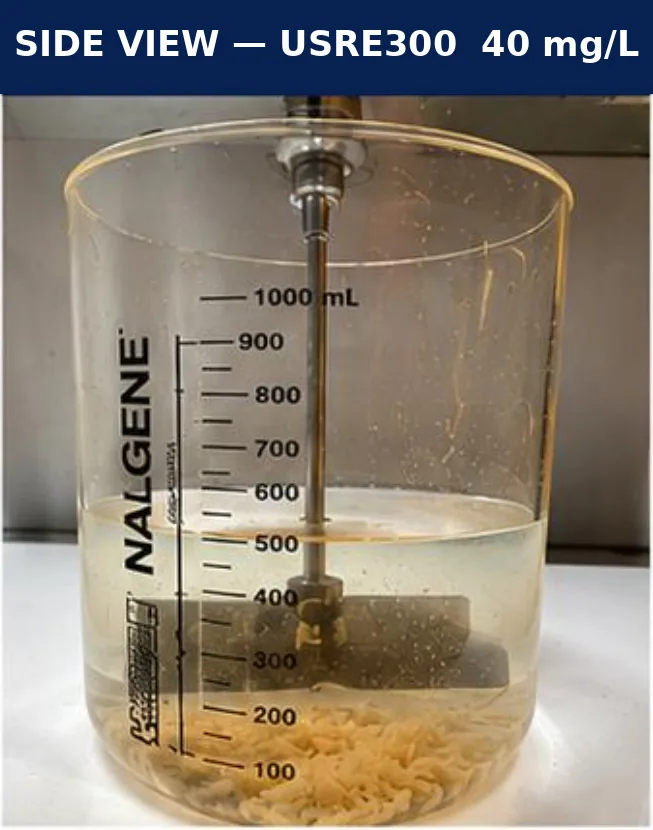
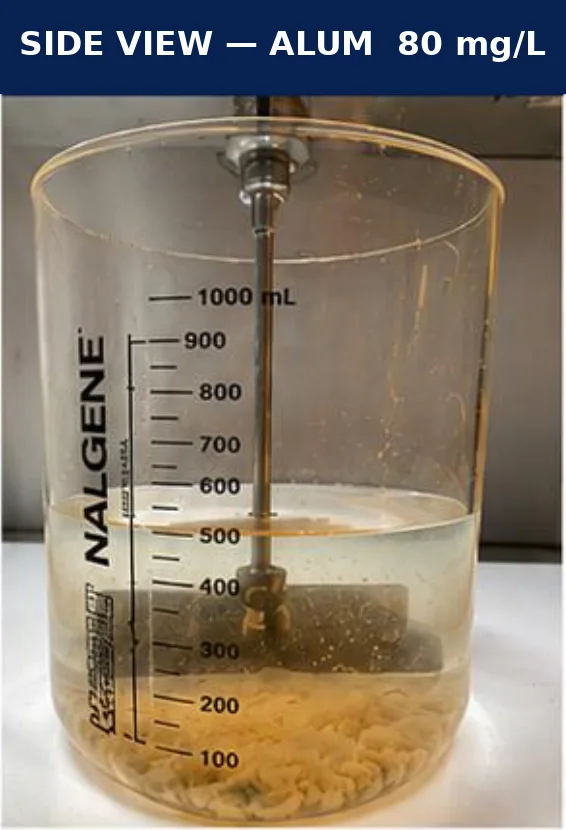
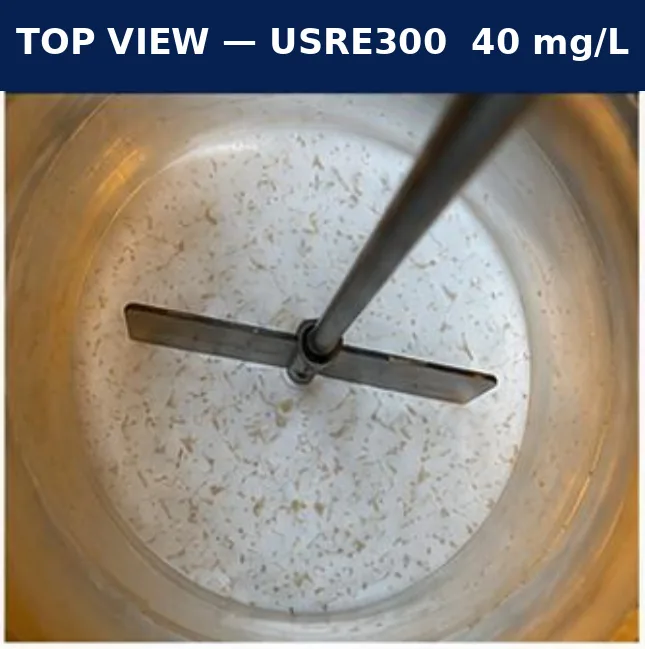
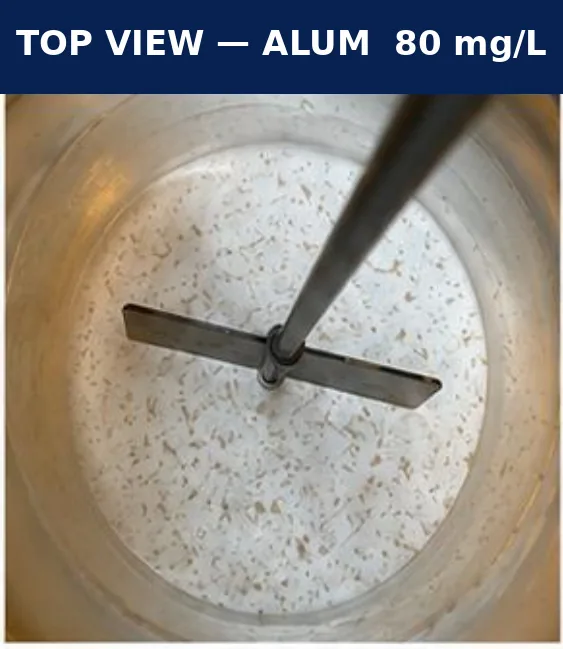
Side-by-side bench test on a low-phosphorus tertiary sample after biological nutrient removal. USRE300 at 40 mg/L. Alum at 80 mg/L.
| Parameter | Raw | USRE300, 40 mg/L | Alum, 80 mg/L |
|---|---|---|---|
| Total phosphorus | 0.3286 mg/L | 0.1132 mg/L | 0.1257 mg/L |
| Phosphorus removed | — | 0.2154 mg/L | 0.2029 mg/L |
| Removal | — | 65.55% | 61.75% |
| Chemical use | — | 333.6 lb/MG (26.9 gal/MG) | 667.2 lb/MG |
USRE300, $0.57/lb
$105.85
per lb total phosphorus removed
$190.15 per million gallons, plus freight. 1.796 lb TP removed per million gallons.
Alum, about $0.40/lb
$157.71
per lb total phosphorus removed
$266.88 per million gallons. The $0.40/lb figure is the price used in that evaluation, not a current market quote.
Under these bench conditions, USRE300’s direct chemical cost per pound of phosphorus removed was lower than the alum comparison. Caustic, sludge, and filtration are not in these numbers. The $6.38 figure in Card A is a different water, with a much higher starting phosphorus. Do not treat the two costs as the same application.
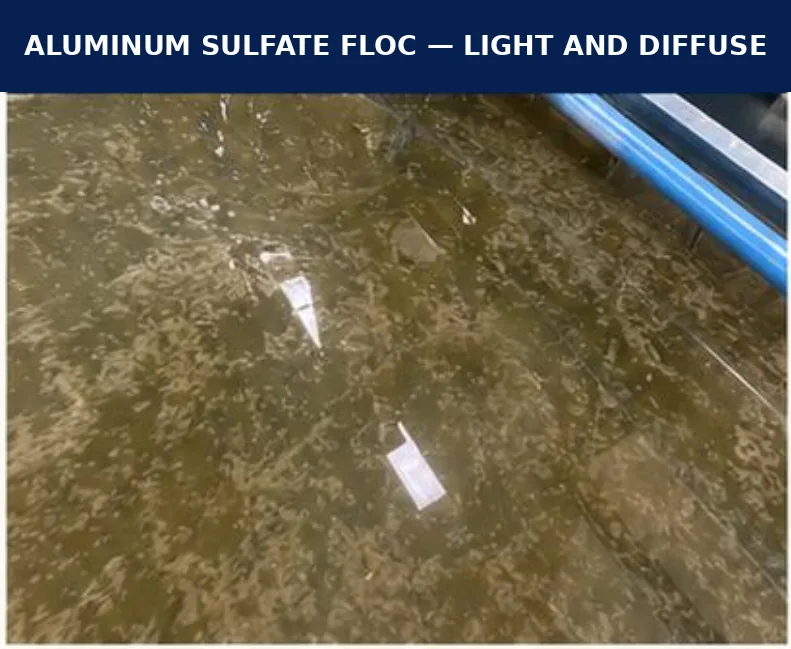
The USRE300 floc was denser and settled faster. The alum floc was lighter and more diffuse. USRE300 also appeared to drop the pH less. No pH series was recorded. Check influent, post-coagulant, and effluent pH, alkalinity, and caustic feed in a plant trial.
General science
Phosphorus capture
- Lanthanum and cerium can bind phosphate and move it into a solid that can be separated. Dose, water chemistry, and solids capture decide the result.
- Published research on lanthanum and cerium chlorides reported strong phosphate precipitation across a wide pH in that study, with less sludge than the iron and aluminum treatments they compared. That is a case study, not a design guarantee. Read the citation.
- Report residual concentration and mass removed, not a removal percentage alone.
Reuse
Solids and Part 503
Lanthanum and cerium are elements. Treatment does not make them disappear. Captured solids can go to digestion, dewatering, land application, landfill, or incineration. EPA’s Part 503 table of land-applied sewage-sludge pollutant limits does not list lanthanum or cerium. Absence from that table is not an approval. Industrial residuals may not be regulated as domestic sewage sludge. Check with your regulator before land application or any reuse.
Why plants switch from ferric and alum
Low dose, a wide pH range, and less sludge than iron or aluminum salts are the general reasons utilities look at this class of coagulant. The points below are what showed up in the independent lanthanum chloride evaluations, not a claim that every plant will see the same numbers with USRE300.
01
Less chemical to receive
A lanthanum chloride feed can replace a much larger ferric chloride volume at the same point.
02
Less sludge to haul
Lower coagulant volume shows up as less chemical sludge through the season.
03
Easier on the plant
A milder pH means less attack on pumps, pipe, and concrete, and less alkalinity added back for nitrification.
04
Permit phosphorus, without losing nitrification
The membrane plant held a very low effluent phosphorus number while ammonia removal stayed above 99%.
05
Fits the ferric system you have
One full-scale trial reused the ferric storage tank and feed pumps.
06
Alum and ferric are the comparison
Plants look at rare earth coagulants when iron or aluminum salts bring sludge, corrosion, or a narrow operating window.
07
Sodium aluminate and alum can grow the solids
Raising an aluminum-based feed to chase a phosphorus limit makes more aluminum phosphate and hydroxide solids. That can mean more sludge, a heavier inventory, more polymer, more press loading, and more recycle. Operators often see effluent solids go up. Rare earth chemistry can bind phosphate in stable compounds with less chemical solids. That is a potential benefit to measure in a trial, not a guaranteed result.
How to trial USRE300
Step 1
Jar test
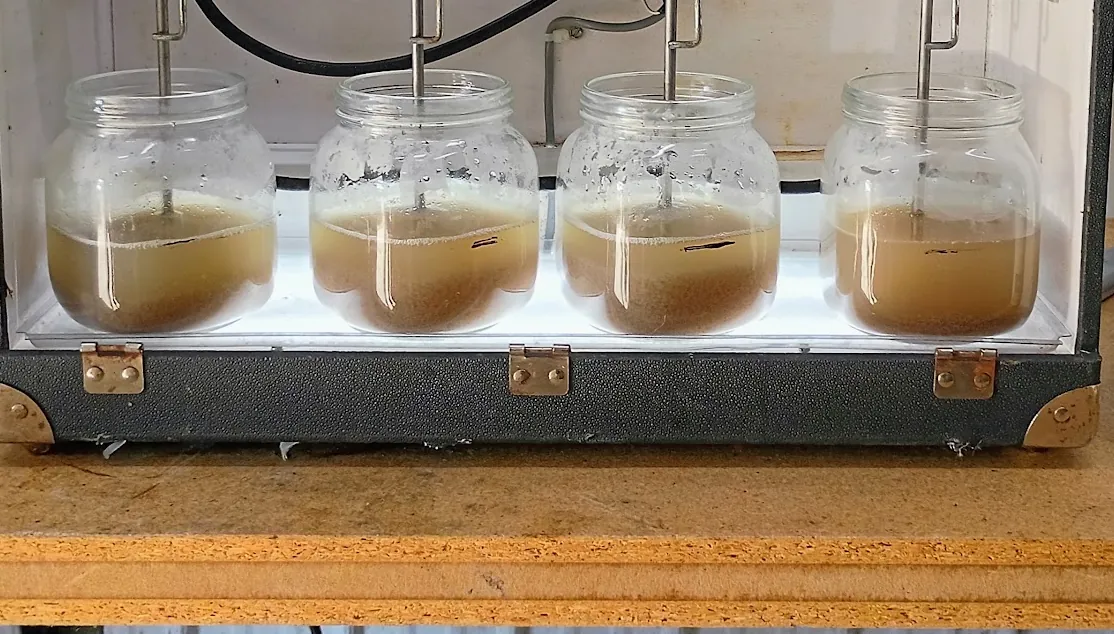
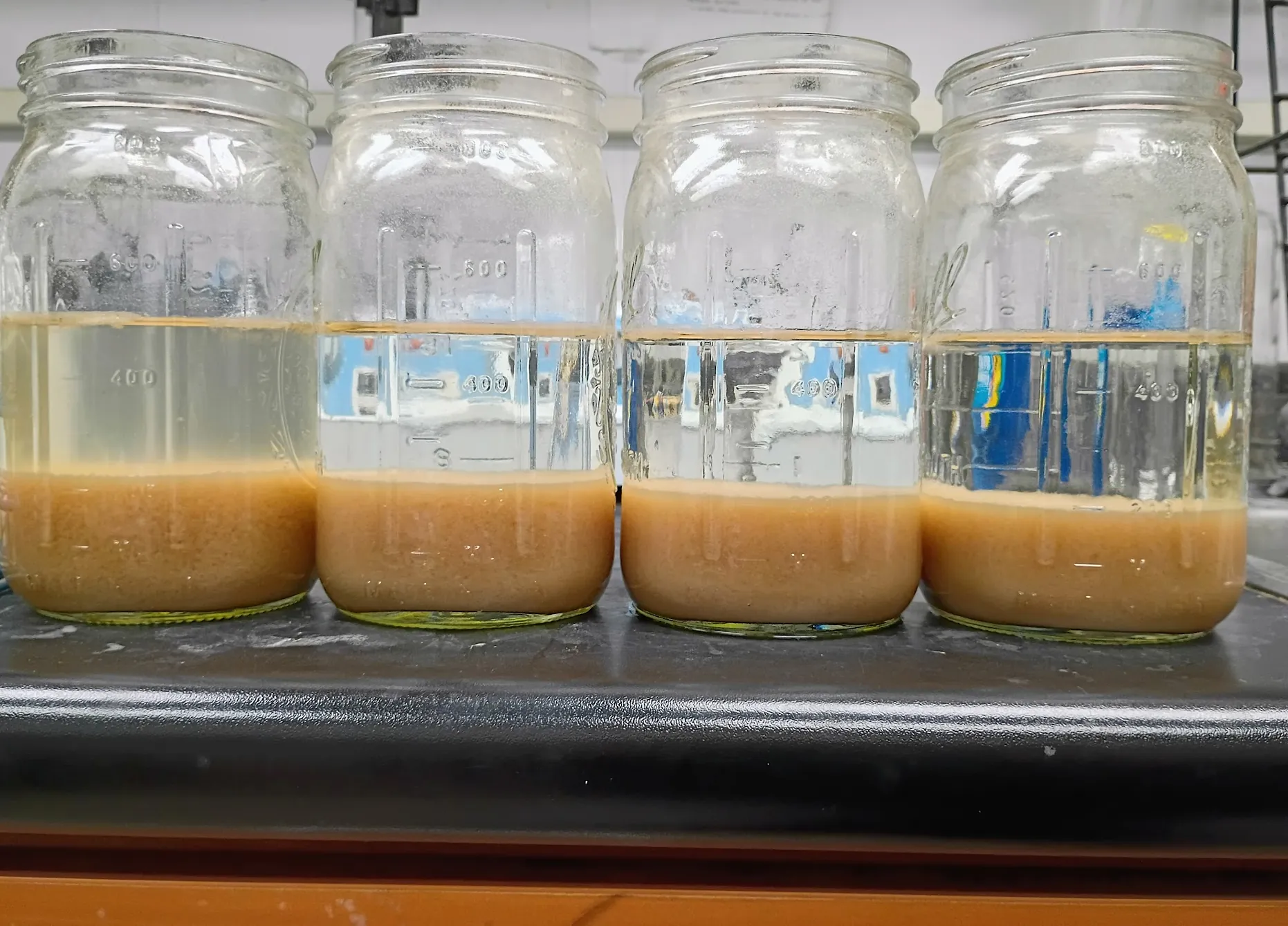
Run jars against the iron or aluminum salt you feed now. Compare phosphorus, sludge volume, and pH at the dose you can actually pump.
Step 2
Request a sample
Tell us the plant, the flow, the current coagulant, the phosphorus target, and where to ship.
Step 3
30-day full-scale trial
The IFAS lab evaluation recommended a 30-day trial after jars. That is a practical window for permit data and sludge handling.
Step 4
Pick the feed point for contact time
On the IFAS plant, return activated sludge ahead of the IFAS gave the longest contact. On the membrane plant, the existing ferric feed point was reused. Match the point to where your process can give the coagulant time.
Results from independent municipal evaluations of lanthanum-based rare earth coagulants. Site-specific results vary; jar testing recommended.